James Harrison :
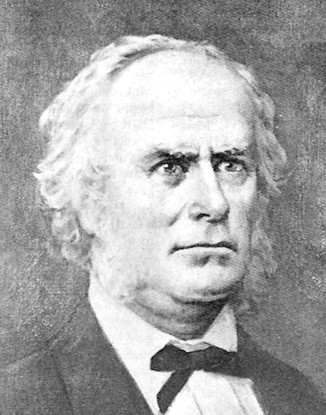
James Harrison was born in Bonhill, Dunbartonshire, Scotland. - 17th April 1816 - Died Geelong
September 3rd 1893 leaving behind a remarkable legacy that profoundly impacted all future generations.
While serving his apprenticeship as a printer in Glasgow, he developed a strong interest in chemistry, enrolling in evening classes. While using Ether to clean metal printing type, he noticed it rapidly evaporated, leaving the metal intensly cold.
That thought remained with him throughout his life.
1837
After completing his apprentiship, he moved to London, where he worked as a compositor before embarking on an adventurous journey to Australia
1838
Arriving Sydney
1839
Left Sydney and moved to Melbourne to work as a compositor and editor.
1840
November he traveled to the newly surveyed townsite of Geelong with a population of around 500 to 545 people.
Being asked to set up a new printing press, and establish as first editor the Geelong Advertiser.
Later becaming the owner of the Geelong Advertiser, and proudly held the distinction of being the first inaugural country newspaper in Victoria.
His substantial editorial contributions were instrumental in shaping public opinion and advocating for local interests during a pivotal and transformative time in Australian history.
1848
Ice was a premium, the need for an alternative supply of ice, sparked his interest. His interest in Chemistry had never left him, now memories of cleaning metal Type with "ETHER", becaming freezing cold, came flooding back. He often refered to as his "light bulb moment,"
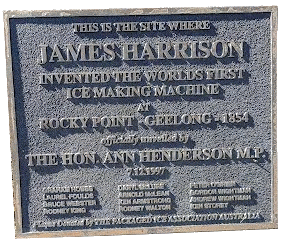
Prompted him to carry out secret experiments in a cave at Rocky Point.
His experiments were directed at creating a CONTINUOUS CYCLE. Using Ether, he persisted with the process of using a compressor to push the Ether into a condenser, where it would evaporate, creating a cooling effect, (absorbing Heat) then returning it back to the Compressor, to be pumped as liquid, back to the condenser again.
1850
While serving as editor of The Age under the influential David Syme His journalism was crucial in disseminating essential information, significant events, such as the groundbreaking discovery of gold in Victoria, and tariff protection
After becoming the sole owner of the Geelong Advertiser, the newspaper was the first country publication in Victoria, and under his guidance, it grew into a daily paper. Harrison was not just a journalist; he was also a dedicated advocate for local miners and farmers, frequently using his platform to address their issues.
He was the first to announce the discovery of gold in the area, which greatly impacted the local economy and further established his prominence in Geelong.
he had a profound and lasting impact on the region's economic development and prosperity.
Harrisons interest in refrigeration was again sparked, prompting him to carry out secret experiments in a cave at Rocky Point Geelong.
He was attempting to create a closed system, using Ether as a REFRIGERANT. A compressor to pump the vapor into a condenser, where it turned back into liquid. And it was ready to be pumpted around again.
Creating that cooling effect, formed the foundation for his future inventions.
1851
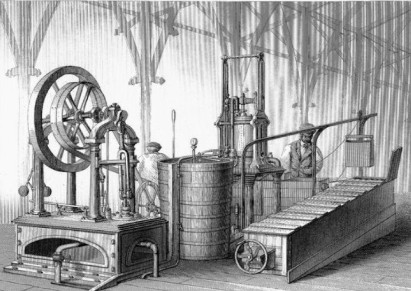
Built his first working PROTO TYPE mechanical ice-making machine, marking the beginning of his venture into mechanical refrigeration.
His system worked by compressing the ether into a liquid, then letting it evaporate through coils to cool the surrounding environment.
These machines were the first large, commercially refrigeration units, establishing modern vapor-compression technology. Soon had 1857 machines, operating in breweries and paraffin works.
His extensive work advanced the field of refrigeration significantly worldwide, had a profound impact on various industries, including food processing and transportation.
Ultimately reshaped how goods were stored, preserved, and shipped, revolutionizing commerce and enhancing food safety for consumers worldwide.
1855
Harrison had developed the world's first commercial ice-making machine, which would transform the industry. And his innovations extended far beyond ice production.
1857
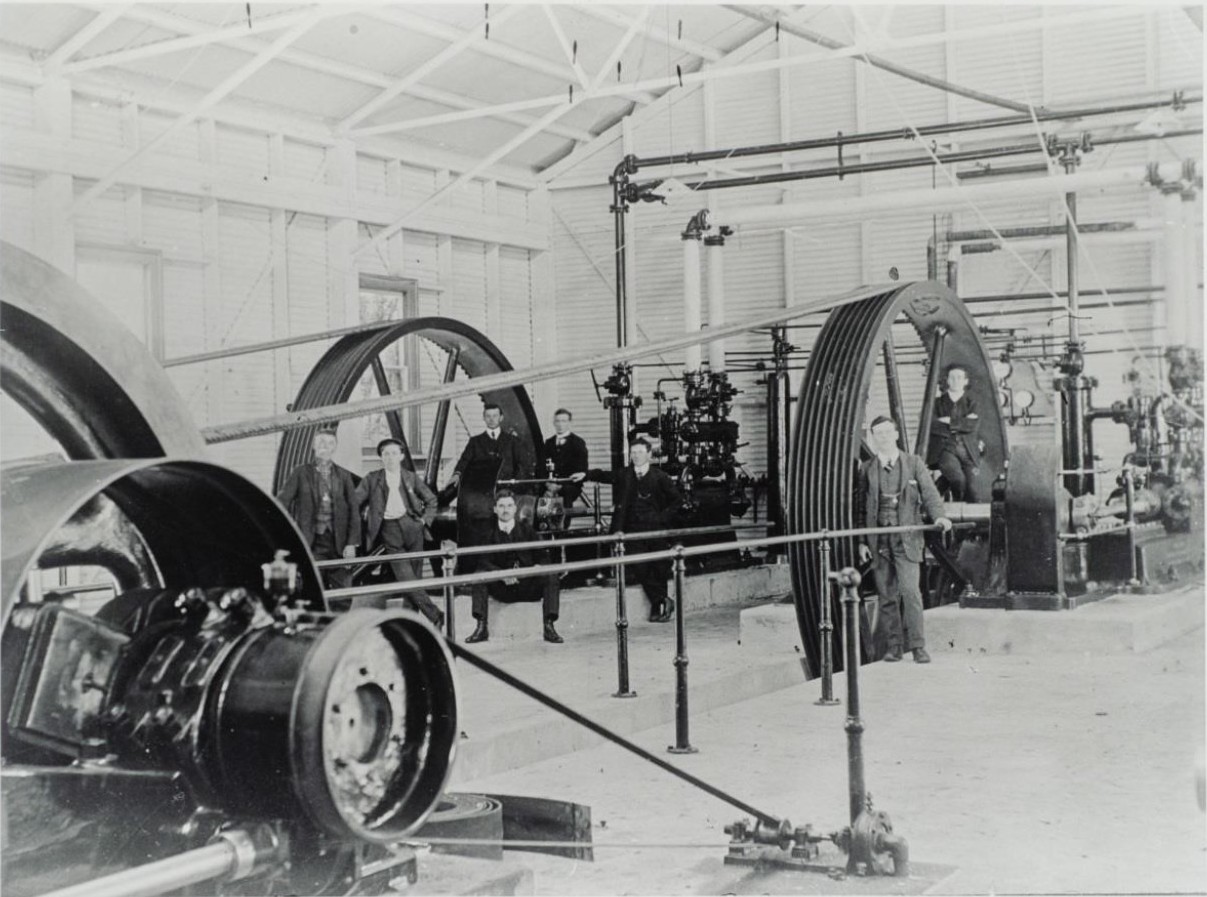
The Harrison-Siebe Ether Vapour Compression Refrigeration Machine, ingeniously constructed in London in that year, represented an extraordinary milestone in the field of ice production technology.
This remarkable machine was capable of generating between 5,000 and 6,000 pounds of ice on a daily basis, and there were optimistic projections
indicating that, when permanently installed and operated consistently, it could achieve an impressive output of 8,000 to 10,000 pounds per day.
This groundbreaking innovation marked a significant and transformative advancement in refrigeration technology, facilitating not only more efficient ice
production but also improved storage capabilities. He soon he had 1857 machines, operating in breweries and paraffin works.
Harrison's exceptional ability to blend his deep knowledge of chemistry with practical and innovative engineering solutions truly highlighted his remarkable creativity and unwavering dedication to advancing the refrigeration industry leaving an indelible mark on industry and society as a whole.
1860
designed and patented an innovative refrigerator used in Scotland for paraffin distillation. In the United States, his technology began to impact ship refrigeration, aiding in the meat export industry.
Harrison joined forces with the esteemed Sir Peter Nicol Russell to establish the Sydney Ice Company, a venture aimed at addressing the growing demand for ice. However, this enterprise ultimately fell into the hands of competing rivals, marking a significant setback for Harrison and his partner.
Despite facing this challenge, Harrison recognized the pressing necessity for reliable refrigeration solutions, particularly in the context of Australia's consistently warm and often harsh climate. To address this need, he embarked on the development of an innovative refrigerator that functioned independently of ice, which proved to be crucial for a wide range of industrial applications.
His keen insight into the challenges associated with ice production in Australia underscored the vital importance of his groundbreaking refrigeration technology, paving the way for advancements in this field.
1873
Melbourne Exhibition, Harrison's remarkable achievements were officially acknowledged at the prestigious where he was awarded a gold medal for successfully demonstrating that meat preserved in a frozen state for several months remained entirely safe and edible.
This significant event highlighted the effectiveness and reliability of his innovative refrigeration techniques, which were crucial for keeping food fresh during extended travel and transportation.
His groundbreaking method of freezing meat not only revolutionized food preservation but also laid the essential foundation for the future of the meat export industry worldwide.
This advancement enabled reliable shipments to England at a market-competitive price, transforming the way meat was traded internationally and contributing to the growth of global commerce.
|
For more information about James Harrison and his contributions to refrigeration, you can explore the
following resources:
Information collected and Collated from freely available online sources by RJBIZ